
Your Enhanced World
The future of Augmented Reality (AR) is set to revolutionize our lives in ways we can only begin to imagine. By blending the digital and physical worlds, AR will transform industries, daily routines, and even how we interact with the physical world. It’s already changing how we shop, work, and learn.
Give your daily life a digital boost
In the future, AR will be an everyday part of life. Imagine walking through a museum and seeing historical figures come to life, and being able to talk to them. or strolling through a park and instantly learning about the plants and animals around you. This won’t require a smartphone screen – it will be available through AR glasses or lenses.
A Significant Advance in Learning

AR will transform education, making learning more engaging and interactive. Students will no longer just read about the solar system—they’ll be able to interact with 3D models of planets, exploring them as though they’re within arm’s reach. This hands-on experience will make learning more accessible and memorable.
Next-Level Shopping and Retail

Shopping will never be the same. AR will allow customers to virtually try on clothes without the need for physical interaction. see how furniture fits in their living rooms. For businesses, this means fewer returns and more satisfied customers.
Enhancing Healthcare and Medicine
Healthcare will see some of the most life-changing applications of AR. Surgeons could use AR to overlay critical information directly onto a patient’s body during surgery, guiding them with 3D visuals for enhanced precision.
Entertainment
Video games, movies, and other forms of media will become more immersive, engaging, and interactive than ever before.
Embracing the AR Future
The future of AR is an exciting, landscape offering endless possibilities for innovation. It’s about personalized, meaningful experiences by enhancing engagement and providing tailored interactions.
The future of AR is not just a technological advancement—it’s the dawn of a new era of interaction, creativity, and human connection.
Imagine standing before a dinosaur skeleton, and through your smartphone or AR glasses, watching it spring to life, its massive form striding across the museum floor. That’s the essence of “augmenting history.” AR overlays digital information onto the real world, adding layers of context, interactivity, and sheer wonder to museum exhibits. It’s not about replacing the physical artifacts, but rather enhancing them, breathing new life into them.
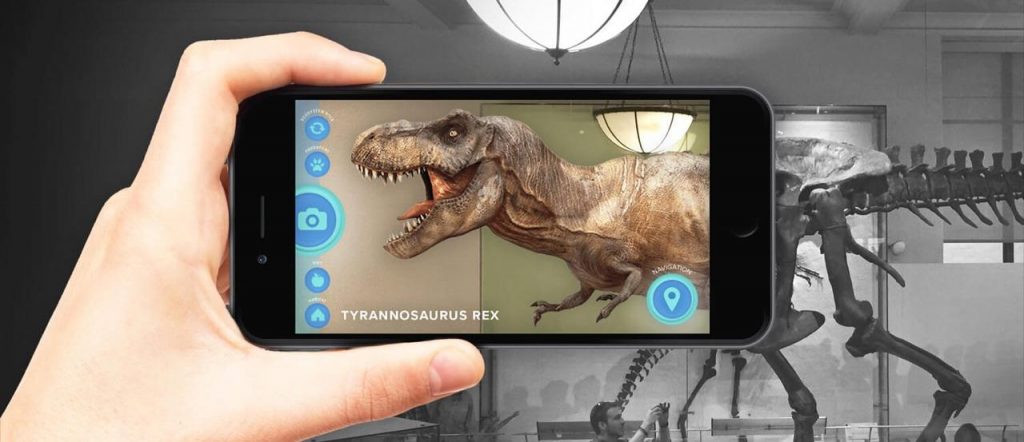
The potential of AR in museums is vast. As technology continues to evolve, we can expect even more sophisticated and immersive experiences. Holographic displays, AI-powered interactive guides, and seamless integration with wearable devices are just a few of the possibilities.